 Pleasantly fragrant rich vanilla beans are the
pods or fruits obtained from a tropical climbing orchid. Mayans used
them to flavor chocolate drink centuries before Spanish first set their
foot in Mexico in 1520. This highly prized bean is native to tropical
rain forest of Central America and only recently spread to other
tropical-regions by Spanish explorers.
Pleasantly fragrant rich vanilla beans are the
pods or fruits obtained from a tropical climbing orchid. Mayans used
them to flavor chocolate drink centuries before Spanish first set their
foot in Mexico in 1520. This highly prized bean is native to tropical
rain forest of Central America and only recently spread to other
tropical-regions by Spanish explorers.Botanically the plant is a perennial herbaceous climbing vine belonging to the family of Orchidaceae, in the genus: vanilla. Scientific name:Vanilla planifolia.
Culinary uses
Real vanilla
is a pleasantly aromatic and very expensive spice only after saffron. In
general, natural vanilla extract is made by finely chopping the beans
and infusing them by dripping alcohol on the pieces.
Alternatively,
the beans are bruised and infused in milk or cream for making ice-cream
and sweet puddings.
Here are some
serving tips:
 |
 |
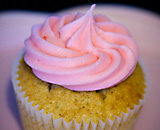
| Vanilla ice-cream on top of muffin! Photo courtesy: shimelle |
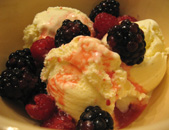
Vanilla beans ice cream with blackberries and raspberries. Photo: kimberlykv |
-
One of the finest flavoring bases, used
exclusively in sweet cookery,
vanilla is added to cakes, biscuits, desserts and puddings.
- It is also used in confectionary to make chocolates, ice-creams, custards, chocolate drinks, etc
 |
 |
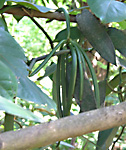
| Vanilla beans in a vine Vanilla planifolia. Note for ready to harvest deep green colored mature beans. |
Processed vanilla beans. The beans turn
dark and appear shriveled. Photo courtesy: acfou |
There exist three main cultivars of vanilla. Among them, Vanilla planifolia is the most sought-after bean worldwide. The other species include Vanilla pompona and Vanilla tahitiensis (grown in Polynesian islands), although the vanillin content of these species is inferior to Vanilla planifolia.
Unripe vanilla pods are harvested when they are 5-8 inches long and turn light yellow. They are then blanched briefly in boiling water, sweated and dried under sun over a period of weeks until they turn dark-brown and wrinkled. White crystalline efflorescence which is vanillin, the main essence of vanilla, appears inside in some of the superior quality pods.
Health benefits of vanilla
-
Vanilla beans are one of the
expensive non-pungent
spices especially used as flavoring agent in a wide array of
sweet-drinks and
confectionaries.
-
Vanilla extract composed of simple and complex
sugars, essential oils, vitamins and minerals.
-
The chief chemical component in the beans is vanillin. They also
include
numerous traces of other constituents such as eugenol, caproic acid,
phenoles, phenol ether, alcohols, carbonyl compounds, acids, ester,
lactones, aliphatic and aromatic carbohydrates and vitispiranes.
-
Ancient Mayans believed that vanilla drink was
supposed to have aphrodisiac qualities. No modern research study,
however, establishes its role in the treatment of sexual dysfunctions.
-
Its extract contains small amounts of
B-complex groups of vitamins such as niacin, pantothenic acid, thiamin,
riboflavin and vitamin B-6. These vitamins help in enzyme synthesis,
nervous system function and regulating body metabolism.
-
This spice also contains small traces of
minerals such as calcium, magnesium, potassium, manganese, iron and
zinc. Potassium is an important component of cell and body fluids that
helps control heart rate and blood pressure. Manganese and copper are
used by the body as co-factors for the antioxidant enzyme, superoxide
dismutase. Iron is essential for red blood cell production and as a
co-factor for cytochrome-oxidases enzymes.

Walang komento:
Mag-post ng isang Komento